EconomyHigh
Banks cut oil and factory loans in Q1 2026 as farm credit rose 4%
Bank credit to Nigerian oil and manufacturing fell by over N11 trillion combined as agriculture surged 23% in Q1 2026. Inside the macro shift reshaping Nigeria’s GDP growth.
By Betini Udom Published Last edited 5 min read Editorial Policy Report a correction
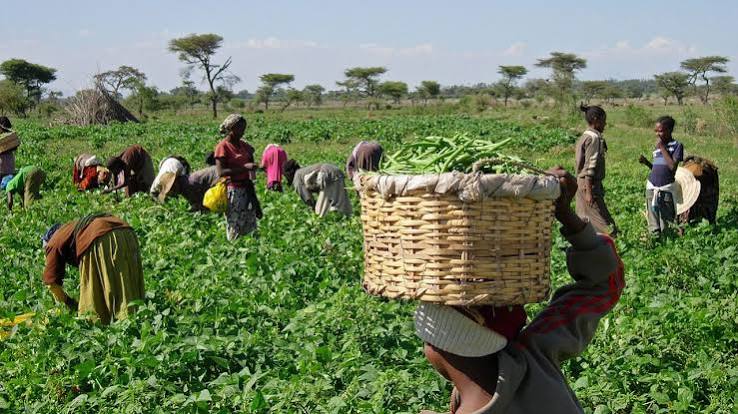
Nigerian banks lent more to farmers and agribusinesses in the first quarter of 2026, and less to oil and gas firms and manufacturers. Central Bank of Nigeria (CBN) figures show bank credit to agriculture rising from ₦3.71 trillion in January to ₦3.86 trillion in March, a gain of about ₦150 billion, or 4%.
Over the same three months, lending to oil and gas fell by about ₦335 billion, and lending to manufacturing dropped from ₦6.57 trillion to ₦5.77 trillion. The figures come from the CBN's quarterly statistical bulletin, reported in August.
It is tempting to read this as banks "ditching oil for agriculture". The numbers say something more modest, and more interesting. Here is what they show, and what they don't.
What exactly do the figures show?
The table compares January and March 2026 for the main sectors. "Share" is each sector's slice of total bank credit to the private sector.
| Sector | January | March | Change | Share, Jan → Mar |
|---|---|---|---|---|
| Oil and gas | 10.91 | 10.58 | −3.0% | 19.0% → 17.7% |
| Finance, insurance, capital market | 9.03 | 9.80 | +8.5% | 15.7% → 16.4% |
| Manufacturing | 6.57 | 5.77 | −12.2% | 11.4% → 9.7% |
| Trade and general commerce | 4.67 | 6.29 | +34.7% | 8.1% → 10.5% |
| Agriculture | 3.71 | 3.86 | +4.0% | 6.5% → 6.5% |
| Power and energy | 1.30 | 1.61 | +23.8% | 2.3% → 2.7% |
| Total private sector | 57.41 | 59.74 | +4.1% | 100% |
Three things stand out. First, agriculture grew at almost exactly the same pace as total lending, so its share stayed at about 6.5% (Derived.). Farms did not win a bigger slice of the pie; the pie grew and they kept their slice.
Second, the biggest winners were trade and commerce, up ₦1.62 trillion (Derived.), and finance companies, up ₦0.77 trillion. ThisDay also led on the jump in trade lending.
Third, oil and gas is still by far the largest borrower. At ₦10.58 trillion, it holds almost three times as much bank credit as agriculture (Derived.).
Why are banks lending less to factories and oil firms?
For manufacturers, the main reported reason is cost. Arise linked the fall to high borrowing costs and rising operating expenses. The CBN's benchmark rate, which sets the floor for what banks charge, was still 26.5% when the CBN held it in July 2026. At that level, many factory projects simply cannot earn enough to repay a loan.
For oil and gas, the drop is small relative to the sector's size. RainingMoney's reading: part of it may be a currency effect rather than a decision. Many oil loans are in dollars, so when the naira firms, their value in naira shrinks even if nothing has been repaid. The reported bulletin figures do not separate this out.
Is agriculture getting a fair share of bank credit?
Not by its weight in the economy. Agriculture made up 26.15% of real GDP in the second quarter of 2026, yet it gets about 6.5% of bank credit (Derived.). In October, the International Finance Corporation (IFC), the World Bank's private-sector arm, said less than 5% of commercial bank lending goes to agriculture, calling it a serious development gap. (The IFC's figure likely uses a narrower base than the CBN total.)
Banks shy away from farming because it is risky to lend against: harvests depend on weather, many farmers lack land titles to pledge as collateral, insecurity disrupts production in key growing areas, and storage and transport losses eat into income.
Is agriculture driving Nigeria's growth?
It is helping. Real GDP grew 3.89% in the first quarter of 2026, with agriculture up 3.15%, against 0.07% a year earlier. In the second quarter, GDP grew 4.43% and agriculture 4.39%, up from 2.82% a year before.
RainingMoney's reading: credit helps, but one quarter of modest loan growth cannot explain a harvest. Weather, input prices and security matter far more.
What is CACS, and does it still work the same way?
The Commercial Agriculture Credit Scheme (CACS) was set up in 2009 by the CBN and the Federal Ministry of Agriculture to fund large commercial farms and agro-processors, using money raised through a bond. Under its 2015 terms, the CBN released funds to banks at 2%, and borrowers paid no more than 9% including all charges: 7 percentage points to the bank and 2 to the CBN. Banks had to bear all the credit risk, meaning they absorbed any loss if a borrower defaulted.
The rate has moved since. In March 2020, the CBN cut interest on all its intervention loans to 5% to cushion the Covid-19 shock, then restored 9% in 2022. More importantly, in December 2023 the CBN stopped accepting new applications under its intervention schemes, as Governor Olayemi Cardoso pulled the bank out of direct development lending. Existing loans kept their terms, and banks were told to recover what is owed. The 2018 guidelines had set the scheme to end on 30 September 2025.
So CACS is not a live source of cheap new money for banks in 2026. The farm lending in these figures is mostly at commercial rates.
What does this mean for food prices?
More credit can mean more inputs, storage and processing, which over time eases supply. But the effect is slow. Food inflation was still 19.59% in September 2026, well above headline inflation of 14.63%.
What to watch
- The CBN's second-quarter bulletin: does agriculture's share finally rise above 6.5%?
- Whether the September cut in the benchmark rate to 23% revives factory lending.
- Bad loans in agriculture as banks recover old intervention credit.
- New risk-sharing schemes, such as the IFC's planned study of farm value chains.
The bottom line
Banks did lend more to agriculture in early 2026, and less to oil and factories. But farm credit only kept pace with overall lending; the real growth went to traders and finance companies. Oil and gas remains banks' biggest exposure by far.
RainingMoney's reading: this is a cautious drift, not a reallocation. Closing agriculture's financing gap will take cheaper money, better collateral and insurance, not one good quarter.
Sources & Verification
- (other sources) FCMB Group Plc Q1 2026 Interim Financial Disclosure
- Fidelity Bank Plc Q1 2026 Financial Disclosures
- Sterling Bank Plc Q1 2026 Financial Disclosures

Founder and Editor-in-ChiefAbuja
Betini Udom
Founder and Editor-in-Chief of RainingMoney. Covers Nigerian, pan-African and global markets, finance and economic policy.
Author profile & archive →The Money Print
Market intelligence before the market opens.
Pan-African capital flows and the stories behind the numbers, on weekday mornings.