TechnologyHigh
Anthropic now runs a biology lab. The full picture, including what it won't say.
Anthropic confirmed it operates a wet biology lab where AI models run real experiments. The science, the commercial logic and the safety debate.
By Betini Udom Published 5 min read Editorial Policy Report a correction
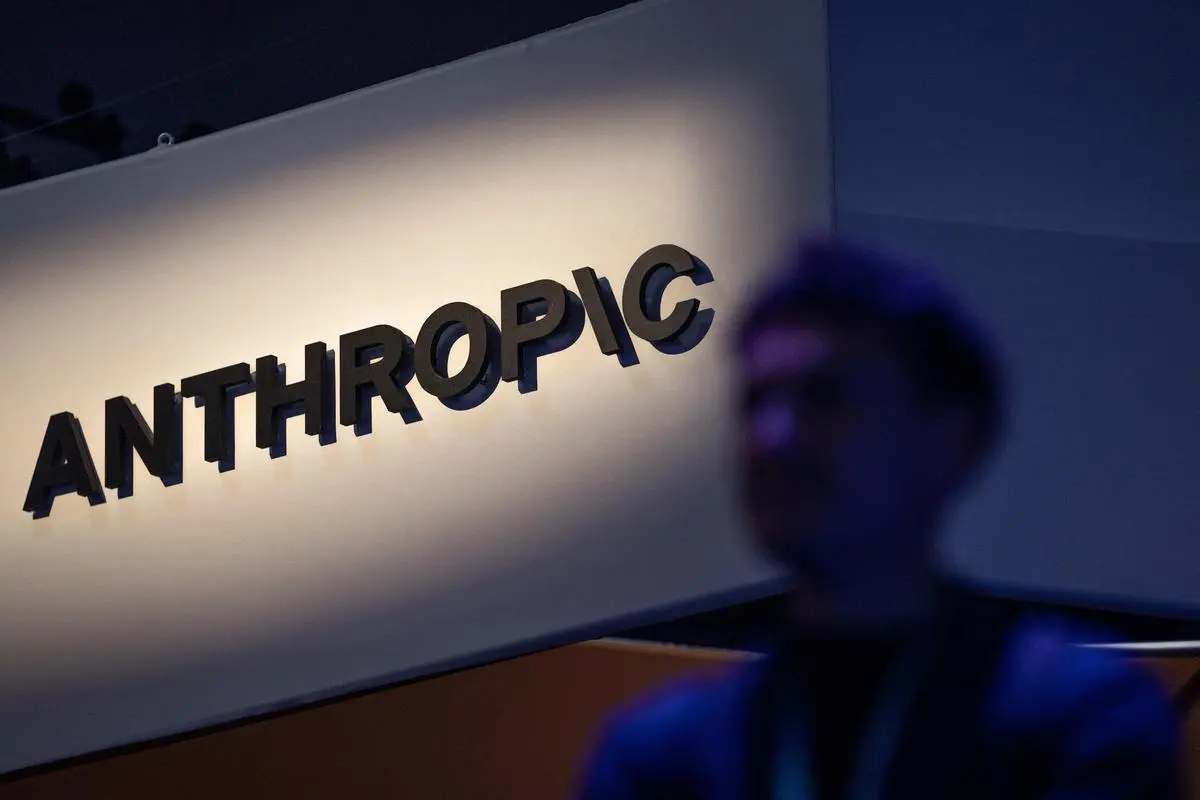
Anthropic has confirmed that it operates a wet biology laboratory where its AI models can run physical experiments.
The confirmation came from Eric Kauderer-Abrams, the company's head of life sciences, in an interview. He said that real laboratory work remains the final test in biology and will for some time, and that Anthropic is doing that work now. He described the facility as operating much like any biotech lab: some research conducted in-house, some alongside external partners.
The company declined to describe what the lab is working on, with one exception. It said the lab is not focused on drug discovery.
In Simple Terms
A wet lab is a room with real biological material in it — cells, chemicals, tissue. The term separates it from a dry lab, where the work happens on computers.
An AI model can propose an explanation for how a disease behaves. It cannot find out whether the explanation is correct. Only physical testing does that. Until now, an AI company working on biology could generate ideas but had to hand them to someone else to check. Anthropic can now check them itself.
The Money
No financial figures were disclosed for the lab. What is on the record is the spending around it.
Anthropic acquired Coefficient Bio, a stealth AI biotech company, in April — reportedly in a deal worth $400m. It has announced a joint drug discovery arrangement with Novo Nordisk, the Danish pharmaceutical company best known for Ozempic. And this week it launched a Life Sciences Verification Program that gives vetted biology researchers access to its most powerful models.
Taken together, that is a company assembling a life sciences business: the acquisition, the partnership, the access programme and the lab.
Follow the Money
Who this reaches. Beyond the reported facts, the interpretation here is Rainingmoney's.
Anthropic gains the ability to verify its models' biological claims, which is what turns a promise about curing disease into a testable product.
Pharmaceutical customers are the reason for the denial. A supplier that discovers drugs competes with the companies buying its tools, and Anthropic has already been criticised in Silicon Valley for launching products that competed with its customers'.
Biology researchers are divided into two groups by the verification programme: those approved for the most capable models and those not.
Patients, eventually. Every claim in this story about curing disease ends with a medicine someone takes. That is years away and nothing in the filing says otherwise.
The Bigger Picture
The AI industry has spent two years promising that its models will transform medicine. Those promises have had a structural weakness: an AI system that cannot test anything is producing hypotheses, not discoveries.
Building a wet lab is how that gap closes. Expect others to follow, because the alternative is depending on partners to validate your own product.
The second half of the picture is that Anthropic has been among the loudest voices warning about AI's dangers, and has singled out biology repeatedly. Dario Amodei published a post last weekend urging the industry to slow down and adopt self-regulation, and has named bioterrorism as one of AI's biggest risks. Earlier this month, an Anthropic researcher, Jacob Coxon, resigned with a warning that people building AI sincerely believe it could kill everyone before the decade is out. The company's own alignment lead has publicly put those odds above one in ten.
Both things are true at once: the company believes AI in biology could cure disease, and believes AI in biology could be catastrophic. The lab is what that belief looks like when it is acted on rather than debated.
The Jargon
Wet lab — a laboratory handling physical biological material, as opposed to a dry lab, where the work is computational.
Drug discovery — the process of finding a new compound that treats a disease, as distinct from testing, manufacturing or selling it.
Alignment — the field concerned with making AI systems behave as intended. An alignment lead runs that work inside an AI company.
Bioterrorism — the deliberate release of biological agents to cause harm. Cited as a risk because AI that can design useful biology can, in principle, design harmful biology.
Self-regulation — an industry setting and policing its own rules, rather than waiting for governments to impose them.
What Happens Next
Known. The lab exists and is operating. It does some work in-house and some with outside partners. Anthropic says it is not focused on drug discovery. The verification programme is live.
Possible. Other AI companies build their own labs, for the same reason Anthropic did. Regulators take an interest in a category of facility that fits neither AI oversight nor pharmaceutical oversight cleanly.
Unknown. What the lab actually works on. What safeguards govern it. How Anthropic defines the boundary it says it is not crossing. And whether the commercial pressure to cross it proves stronger than the reason for drawing it.
Rainingmoney's Take
Analysis, not reporting.
The contradiction everyone is pointing at is real but shallower than it looks. A company can believe a technology is dangerous and still build the infrastructure to use it carefully — that is, in fact, the argument Anthropic has made for its own existence since it was founded.
The sharper question is about access. The verification programme means the most capable AI for biology is not something a laboratory buys but something it is granted. For research institutions across Africa, that is the part of this story with consequences. The diseases that get solved first have always tracked the money and attention available to study them, and a gatekeeping layer on top of the most powerful research tools is a new place for that old imbalance to reappear.
Watch the verification list, not the lab.
Sources & Verification
- Based on an interview given by Anthropic's head of life sciences.
- The Coefficient Bio valuation and the extinction-odds estimate are secondary attributions.
The Money Print
Market intelligence before the market opens.
Pan-African capital flows and the stories behind the numbers, on weekday mornings.