EconomyHigh
African central bank decisions September 2026 explained
Nigeria cut to 23%, South Africa hiked to 7.25%, Egypt, Ghana and Morocco held. The full report on Africa's diverging interest rate decisions.
By Betini Udom Published 7 min read Editorial Policy Report a correction
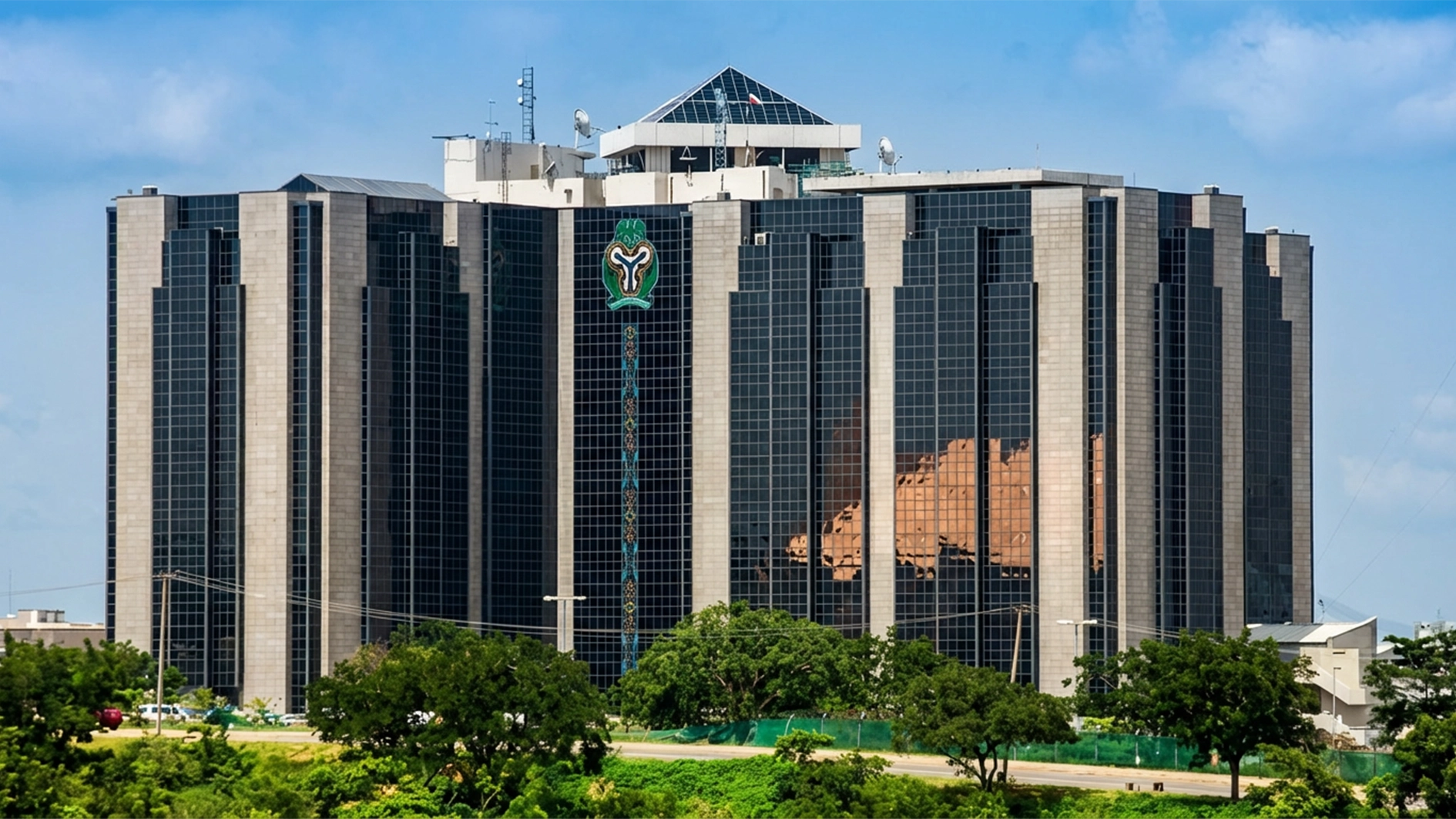
Five of Africa's largest central banks set interest rates in September, and they did not agree.
The Central Bank of Nigeria cut its benchmark rate by 350 basis points to 23%, its biggest single reduction since 2007. It had held the rate at 26.5% at both its May and July meetings.
The South African Reserve Bank went the other way, raising its policy rate by 25 basis points to 7.25%. It was the second increase of the year and the committee voted for it unanimously.
Three others left rates alone. Egypt kept its deposit rate at 19% and its lending rate at 20% for a sixth consecutive meeting. Ghana held at 14% for a third straight meeting. Morocco held at 2.25%.
In Simple Terms
A central bank's benchmark rate is the anchor price of money in an economy. It is not the rate on anyone's actual loan, but it is the reference banks use when setting what they charge borrowers and pay savers.
Raising it makes money more expensive, which slows spending and cools rising prices. Cutting it does the opposite. Holding means a bank thinks conditions are balanced enough to wait.
The unusual thing about this month is that these five banks were looking at broadly the same external pressures — a conflict in Iran pushing energy prices, disrupted supply chains, tighter global financial conditions — and still landed in three different places.
The Money
For a Nigerian borrower, the benchmark cut is worth ₦3.50 on every ₦100 of a year's borrowing, if it reaches lending rates at all: ₦26.50 of interest at the old rate against ₦23 at the new one. (Derived from the rate change. Actual loans are priced above the benchmark, so this shows the scale of the move rather than the cost of any real loan.)
Whether it reaches lending rates is genuinely open, and the CBN's own explanation is the reason for doubt. Cardoso said the cut was made because market interest rates had increasingly diverged from the benchmark — the rates actually being used in the market had moved away from the official one. He called the decision "an operational reset rather than a change in the overall policy stance."
Read carefully, that is the central bank saying it brought its number to where the market already was. A benchmark moving toward market rates does not pull market rates down with it.
Follow the Money
Beyond what the banks stated, this section is Rainingmoney's reading.
Nigerian borrowers get a lower benchmark and an uncertain pass-through. Businesses waiting on cheaper credit should watch actual loan pricing rather than the announcement.
Nigerian savers and fixed-income investors were already earning market rates that had drifted from the benchmark. If the CBN's account is right, their returns are governed by those market rates, not by this decision.
South African households and businesses face dearer credit into a downgraded growth year — the cost the SARB has chosen to pay.
Currency and cross-border investors now face a much wider spread of returns across African markets, which changes where money flows. A 23% Nigerian rate and a 2.25% Moroccan rate are not competing for the same investor.
Importers everywhere on this list are exposed to the same fuel and supply-chain pressures their central banks named, regardless of which way their own bank moved.
The Bigger Picture
For much of the past few years African central banks moved in loose formation, because they were reacting to the same thing: a global inflation surge and the rate cycles of much larger economies.
That formation has broken, and each bank is now defending against a different domestic risk.
Nigeria is repairing an instrument. When market rates and the benchmark drift apart, the benchmark stops describing the economy, and monetary policy loses its grip — the CBN moved to close that gap.
South Africa is defending expectations. Kganyago pointed to slowing growth and inflation well above target, and singled out services inflation as the concern. The bank cut its 2026 growth forecast to 1.2% from 1.4% — about a seventh off expected growth (derived) — and raised its near-term inflation projections, expecting a return toward its 3% target only around late 2027. It is accepting weaker output now to stop a fuel shock becoming permanent.
Ghana is guarding a disinflation it does not yet trust. Inflation rose to 5% in August from 4.6%, still below the bottom of its target band, yet the rate stays at 14% — a real rate near 9 percentage points (derived), the tightest here. Asiama credited exchange rate stability with containing imported inflation while noting that "global tensions have constricted global supply chains."
Egypt is watching an unhelpful split in its own data. Headline urban inflation fell to 14.5% from 14.9%, but core inflation — the measure that strips out volatile items — rose to 14.9% from 14.7%. A falling headline with a rising core suggests the improvement sits in prices that could reverse. Growth also slowed to 4.7% in the second quarter from 5%.
Morocco has almost no inflation and a growth problem instead. Prices averaged 0.3% over the first eight months, helped by transport subsidies and stable gas and electricity costs. The bank expects 0.7% this year and 1.5% in 2027. But growth is projected to fall to 4.4% in 2026 from 4.9% in 2025, and then to 2.9% in 2027 — two percentage points of deceleration. (Derived.) With rates at 2.25%, there is little room left to cut.
The Jargon
Basis point — one hundredth of a percentage point. 350 basis points is 3.5 percentage points.
Benchmark or policy rate — the anchor interest rate a central bank sets. In Nigeria it is the Monetary Policy Rate.
Monetary policy transmission — how a central bank's rate decision actually reaches loans, savings and spending. When transmission is weak, the official rate changes and daily life does not.
Policy corridor — the band of rates around the benchmark at which the central bank lends to and borrows from banks. Recalibrating it is a plumbing adjustment to how money moves through the system.
Core inflation — inflation with volatile items such as food and fuel removed, used to see the underlying trend.
Real interest rate — the interest rate minus inflation. It shows what borrowing costs after rising prices are accounted for.
Target band — the range a central bank wants inflation to stay within.
What Happens Next
Known. Nigeria's rate is 23% and the CBN has stated its reasoning. South Africa's rate is 7.25% after a unanimous vote, with growth forecast at 1.2% for 2026. Egypt, Ghana and Morocco have all extended runs of unchanged rates. Cardoso expects Nigerian inflation to moderate further in the short to medium term.
Possible. If the CBN's realignment holds, Nigerian lending rates change little. If instead this is the opening of an easing cycle, a second cut follows. South Africa's own forecast implies inflation rising above 5% before falling back toward 3% by late 2027, which would mean more tightening before any relief.
Unknown. Whether Nigerian banks pass any of this on. Whether inflation across these economies withstands renewed energy and supply-chain pressure. And how long the conflict driving those fuel prices persists — every bank on this list named external shocks, and none of them controls that variable.
Rainingmoney's Take
Analysis, not reporting.
The most valuable fact in this story is also the quietest one: the governor of the CBN told the public that a 350-basis-point cut was not a loosening. Central bankers do not usually volunteer that their largest move in nineteen years means less than it appears to. That it was said at all deserves to be taken seriously.
It also points at the real issue. A benchmark that has drifted from market rates is a warning about how much grip monetary policy has in Nigeria — and grip, not the level of the rate, is what determines whether CBN decisions reach ordinary borrowers. Fixing it is the right thing to do. It is not the same as good news.
For readers the practical guidance is unglamorous. Do not restructure a loan, delay a purchase or change an investment plan on the strength of this headline. Watch two numbers instead: what your bank actually charges next month, and whether the September inflation reading moves by more than a rounding error. Those will tell you what this decision meant. The 350 does not.
Sources & Verification
- Policy decisions and statements from the Central Bank of Nigeria, the South African Reserve Bank, the Central Bank of Egypt, the Bank of Ghana and Bank Al Maghrib.
The Money Print
Market intelligence before the market opens.
Pan-African capital flows and the stories behind the numbers, on weekday mornings.