EconomyHigh
More passengers, no profit : the strange economics of flying in Africa
African air traffic will hit 137.3m in 2026, yet airlines expect a 0.2% margin. Taxes, trapped funds and costly reroutes explain why
By Betini Udom Published 4 min read Editorial Policy Report a correction
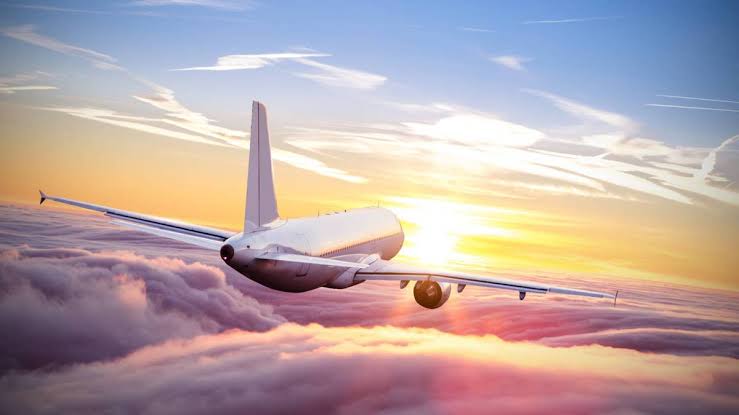
African airlines are expected to carry 137.3 million passengers in 2026, a 21.5% jump on last year. By any normal business logic, that should be a boom year. It isn't. The African Airlines Association (AFRAA), whose 50 members carry more than 85% of the international traffic flown by African operators, says the continent's carriers are heading for a profit margin of just 0.2% — among the lowest of any region in the world.
AFRAA presented the figures at a media roundtable in Nairobi and used the occasion to call on governments, regional bodies and lenders to act together before the demand surge is wasted.
What does a 0.2% margin actually mean?
Picture an airline that earns ₦100 in revenue. After paying for fuel, crew, leasing, maintenance, airport charges and everything else, it keeps 20 kobo. (Rainingmoney's illustration, derived from the 0.2% figure.)
That leaves almost no cushion. One grounded aircraft, one currency swing or one fuel spike is enough to turn a thin profit into a loss.
How can traffic jump 21.5% and profits barely move?
Because airlines are adding seats faster than passengers are filling them. AFRAA's diagnosis is that capacity growth is running ahead of demand growth. When supply outpaces demand, fares come under pressure and load factors soften, so extra traffic does not translate into extra profit.
For context, a 21.5% rise to 137.3 million implies roughly 113 million passengers in 2025. (Derived figure.)
Isn't Africa supposed to be a huge market?
It is — on paper. The continent's population is expected to reach 1.58 billion this year, with a median age of 19, and African economies are growing at about 4.3% a year. Yet AFRAA puts air travel penetration at only around 7% of the population, one of the lowest rates anywhere.
The customers exist. The problem is getting them onto planes at a price they can pay and a cost airlines can survive.
Where does your ticket money go?
Shrink an African air ticket to ₦100. According to AFRAA, somewhere between ₦35 and ₦40 of it goes to taxes, fees and charges. The global average is closer to ₦20. (Rainingmoney's ₦100 illustration of AFRAA's 35–40% and ~20% figures.)
That is money the traveller pays but the airline never keeps — and it makes flying more expensive for exactly the young, price-sensitive population the industry needs to win over.
Why can't airlines get their own money out?
Governments across Africa were holding an estimated $774 million in blocked airline funds as of March 2026 — the largest regional share of trapped airline cash in the world. These are ticket sales that foreign carriers have earned locally but cannot repatriate, usually because of foreign exchange shortages or restrictions.
Nigerian readers will know this story well. Trapped funds make international airlines cut routes or raise fares, which again lands on the passenger.
Why doesn't Africa just buy more planes?
Access is the problem. Africa receives only 2% of global aircraft deliveries, against 35.6% for Asia-Pacific and 24% for Europe. On the ground, AFRAA estimates the continent needs $25 billion to $30 billion of investment in airports and air navigation systems over the next decade.
What does the Sahel have to do with fares?
A conflict-driven no-fly corridor stretching roughly 4,000 kilometres across Niger, Mali, Sudan and Libya is forcing airlines into long detours. Longer routes burn more fuel and push up operating costs — on an industry already running at a 0.2% margin.
What are the airlines asking for?
AFRAA Secretary General Abderahmane Berthe said African aviation is ready to grow with the continent, but warned that "readiness is not the same as capacity." His asks to governments were direct: release the blocked funds, reduce taxes on air travel, and turn the market liberalisation they have already signed onto into practice. He also credited Afreximbank, the African Development Bank and the African Union Commission for their work on financing and infrastructure.
AFRAA's six-point agenda covers:
- Fleet financing — easier access to aircraft for African carriers
- Long-haul capacity — more intercontinental flying by African airlines
- Market liberalisation and safety — opening routes between African countries
- Airspace efficiency — shorter, cheaper routing
- Local MRO — building maintenance, repair and overhaul capacity on the continent instead of flying aircraft abroad for servicing
What to watch
This section is Rainingmoney's reading, not AFRAA's.
Ticket taxes in national budgets. The quickest lever governments control. Any cut in aviation charges would show up directly in fares.
The pace of blocked-fund releases. Watch whether the $774 million figure falls in AFRAA's and IATA's next updates.
Open skies in practice. The liberalisation Berthe referred to is the Single African Air Transport Market (SAATM), which many African states have signed but few have fully implemented. Progress here would let African carriers fly between African cities without routing through hubs outside the continent.
Sahel airspace. As long as the corridor stays closed, West African routes to Europe and North Africa carry a cost penalty.
The bottom line: Africa's airline industry does not have a demand problem. It has a cost, cash and access problem — and most of the fixes sit with governments, not airlines.
Sources & Verification
- Figures from the African Airlines Association (AFRAA), presented at a media roundtable in Nairobi.
The Money Print
Market intelligence before the market opens.
Pan-African capital flows and the stories behind the numbers, on weekday mornings.